
Frameworks
All keynote speeches and strategic advisory are based on four core frameworks, each developed and refined in Shardul's own research and vetted through real-world applications.
Supply Chain Scenario Planning
Supply Chain Orchestration
Axiomatic Scenario Development
Scenario Stress-test & Vigilance


A business model framework to create value in high-uncertainty markets (without product innovation) by detecting high-fidelity signals of hyperlocal demand, maintaining a responsive supply network with stable nodes, and prioritizing demand–supply synchronization.
A supply chain preparedness framework to enable organizations and their primary supply chain partners to collaboratively uncover hidden risks and regain control over strategic decisions in uncertain and complex environments.
A structured, data-informed framework and process, based on Shell-famed Intuitive Logics approach, to transform broad macro-level trends and uncertainties into plausible, company-specific future scenarios to guide high-stakes strategic decisions.
An execution-focused framework to stress-test strategic choices, monitor macro-environment using indicators, and align leadership sensemaking of weak signals of complex environment shifts to ensure organizational resilience in shifting markets.
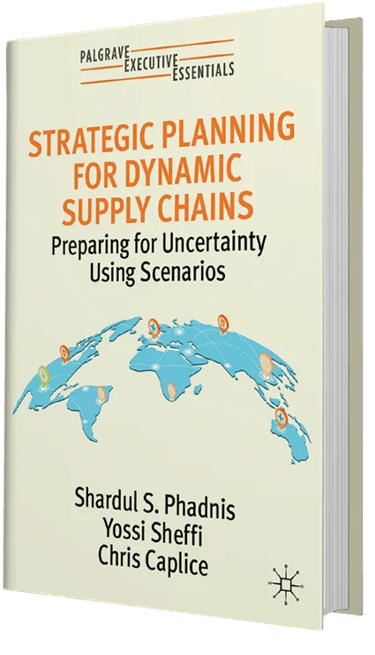
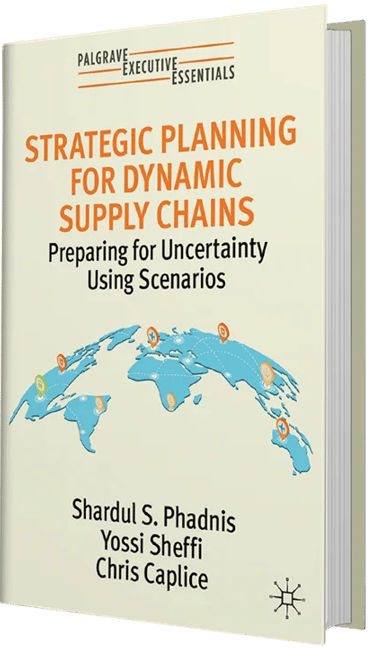
Strategic Planning for Dynamic Supply Chains
This book presents a strategic decision-making process – scenario planning – to help organizations build flexible supply chain infrastructures and adapt them to uncertain shifts in the business environment. It presents theoretically grounded processes for developing and applying scenarios and illustrates them using the authors’ three first-hand case applications. The book also provides case evidence to answer if the scenario invention worked.


Ralf Busche
Senior Vice President European Site Logistics Operations, BASF, Ludwigshafen am Rhein, Germany
Imagining the unthinkable! This book is an essential contribution to all supply chain professionals in times of unprecedented events and turbulent markets that challenge every supply chain and demand for higher capabilities by preparing for the unknown.
Selected Reviews
Martin Christopher
Emeritus Professor of Marketing and Logistics, Cranfield School of Management, UK and author of Logistics & Supply Chain Management
Once again, the MIT team from the Center for Transportation and Logistics have broken new ground. The use of scenario planning, whilst widely used elsewhere, has rarely been deployed in the development of supply chain strategies.
Books and Articles

Selected Publications
MIT Sloan Management Rev. (2026)
Presents a complete set of Scenario Planning tools necessary to complement use of multiple scenarios.
MIT Sloan Management Rev. (2021)
Introduces Supply Chain Scenario Planning to show benefits of joint buyer-supplier scenario planning
Evidence from field experiments showing how Scenario Planning influences expert judgment.
MIT Sloan Management Rev. (2016)


Management and Business Rev. (2022)
Supply chains need vigilance, not just visibility. The article explains why and how the two are different.


California Management Rev. (2026)
Adapting Supply Chain Orchestration to circularity requires reversing the demand and supply sides.
Acad. Management Perspectives (2024)
Seminal work on how Supply Chain Orchestration creates value w/o tech innovation and its birth/demise.


For the complete list of scholarly and practitioner publications, visit

